
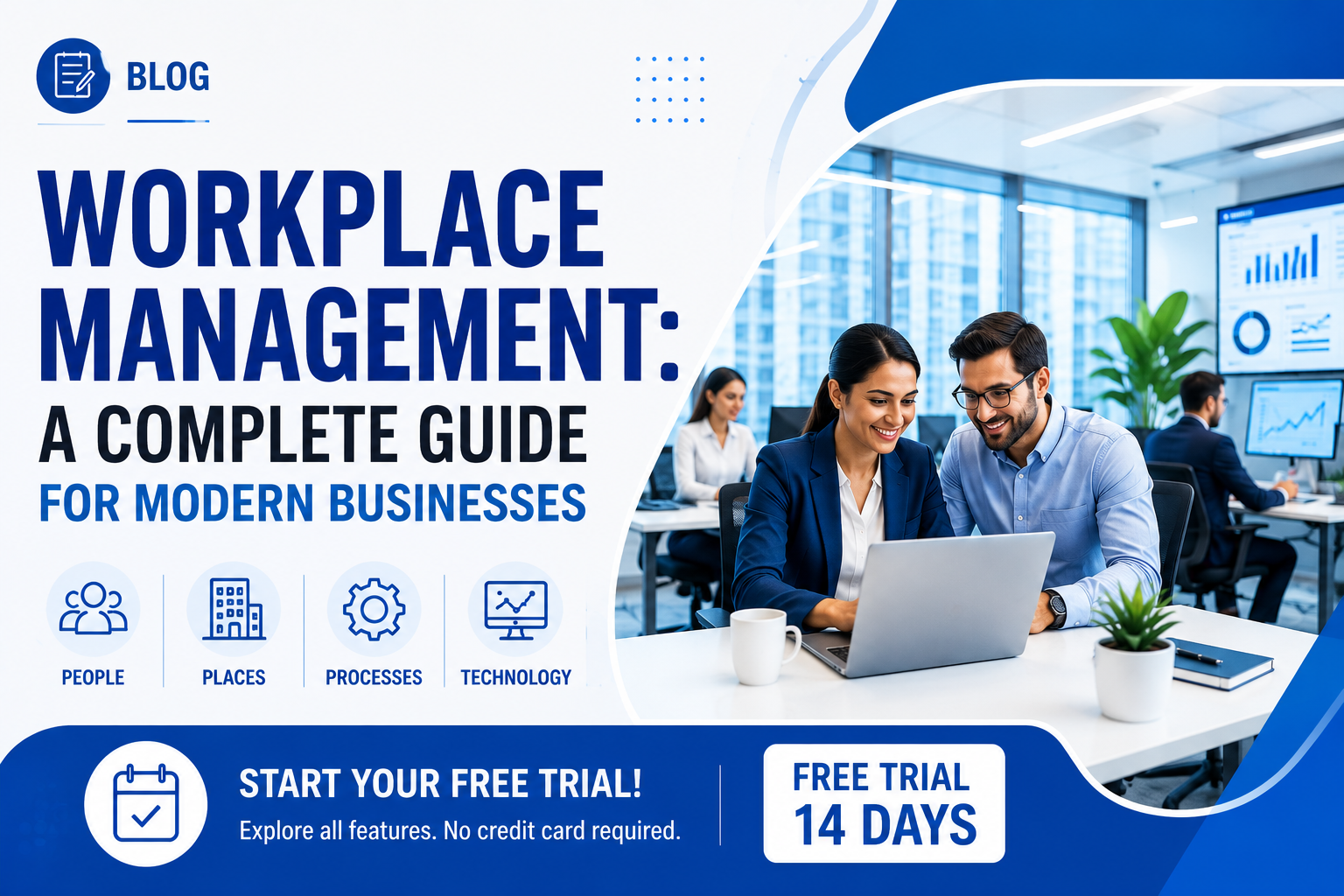
Workplace management has become an essential part of running a successful modern business. Effective management of people, environments, technology, and daily operations is more crucial than ever as firms adjust to hybrid work, AI in the office, flexible working, and shifting employe expectations.
A well-thought-out workplace management approach can lower operating expenses, boost employe engagement, increase productivity, and improve the employe experience. Whether you run a small business or a large organization, effective workplace management can help create an environment where both employees and the business can thrive.
What Is Workplace Management?
Workplace management is the process of managing a company's physical workplace, employees, technology, resources, and daily operations.Its objective is to establish a productive, safe, effective, and upbeat workplace.
Modern workplace management goes beyond simply managing office space. It includes areas such as:
Office and facility management
Employee experience
Workplace technology
Hybrid and remote work
Resource and space management
Workplace safety
Employee wellbeing
Team collaboration
Operational efficiency
By bringing these areas together, businesses can create a workplace that supports both organizational goals and employee needs.
Why Is Workplace Management Important?
Effective workplace management can have a direct impact on business performance. When employees have the right tools, environment, and support, they can work more efficiently and collaborate more effectively.
One of the biggest benefits is improved workplace productivity. A well-organized workplace reduces unnecessary distractions and makes it easier for employees to access the resources they need.
It can also improve employee engagement. Employees are more likely to feel motivated and connected when they have a comfortable workplace, clear communication, flexible working options, and access to modern technology.
Another important benefit is employee wellbeing. Businesses are increasingly focusing on mental wellness, work-life balance, comfortable workspaces, and healthier workplace environments. These factors can contribute to greater employee satisfaction and retention.
Workplace Management in the Era of Hybrid Work
Hybrid work has transformed how businesses manage their workplaces. Employees may now divide their time between home, the office, and other locations.
This creates new challenges for workplace managers. Companies need to understand how office spaces are being used and ensure employees have access to meeting rooms, desks, collaboration areas, and technology when they come into the office.
Flexible workplace policies can help organizations adapt to these changes.Desk reservations, conference spaces, office occupancy, visitor access, and workplace resources can all be managed by businesses using workplace management solutions.
The goal is not simply to bring employees back into the office. Instead, modern workplace management should create an environment where employees have a reason to collaborate, connect, and perform at their best.
The Role of Technology in Workplace Management
Workplace technology is playing a major role in modern business operations. Digital workplace platforms can help organizations manage facilities, resources, communication, employee services, and workplace data from a centralized system.
Businesses can utilize technology, for instance, to schedule meetings, handle maintenance requests, keep an eye on office occupancy, and enhance communication between staff and facilities teams.
Another major trend is AI in the workplace. Artificial intelligence can help businesses analyze workplace data, identify patterns, automate routine tasks, and support better decision-making.
As the future of work continues to evolve, businesses that effectively use workplace technology can become more agile and responsive.
Best Practices for Effective Workplace Management
Businesses can improve workplace management by following a few key practices.
1. Understand Employee Needs
Regularly collect employee feedback to understand what is working and what needs improvement.Workplace conversations, feedback forms, and surveys can all yield insightful information.
2. Invest in Workplace Technology
Use digital tools that simplify workplace operations.Technology can enhance employee satisfaction, resource management, communication, and space usage.
3. Support Flexible Work
Develop clear policies for hybrid and flexible working. Employees should understand when they are expected to be in the office and how they can access workplace resources.
4. Focus on Employee Wellbeing
Create a workplace that supports physical and mental wellbeing. Comfortable workspaces, adequate breaks, good lighting, collaboration areas, and wellness initiatives can contribute to a healthier work environment.
5. Measure Workplace Performance
Use measurable indicators such as office occupancy, employee satisfaction, resource usage, productivity, and operational costs. Data can help workplace managers identify opportunities for improvement.
The Future of Workplace Management
The future of workplace management will be increasingly connected, flexible, and data-driven.AI, workplace analytics, employe experience, hybrid work, sustainability, and smart workplace technology are likely to receive more attention from businesses.
Instead of treating the workplace simply as a physical location, organizations are beginning to view it as an ecosystem that connects people, technology, spaces, and business objectives.
Companies that adapt their workplace management strategies to these changing expectations can create more productive and engaging environments while improving operational efficiency.
Conclusion
Effective workplace management is no longer just about maintaining an office. It is about creating a workplace that supports employees, improves productivity, manages resources efficiently, and adapts to changing business needs.
From hybrid work and employee wellbeing to AI in the workplace and workplace technology, modern businesses have many opportunities to improve how their workplaces operate.
By understanding employee needs, adopting the right technology, supporting flexible work, and using data to make informed decisions, organizations can build a workplace that is productive, engaging, and prepared for the future of work.
Ready to Transform Your Workplace Management?
Take the next step toward a smarter, more productive workplace. Simplify workplace management, improve employee experience, and make better use of your office resources with the right technology.
Start your 14-day free trial today—no commitment required. Discover how a modern workplace management solution can help your business work smarter, improve productivity, and create a better workplace experience.
Start Your 14-Day Free Trial Today!




No comments found