
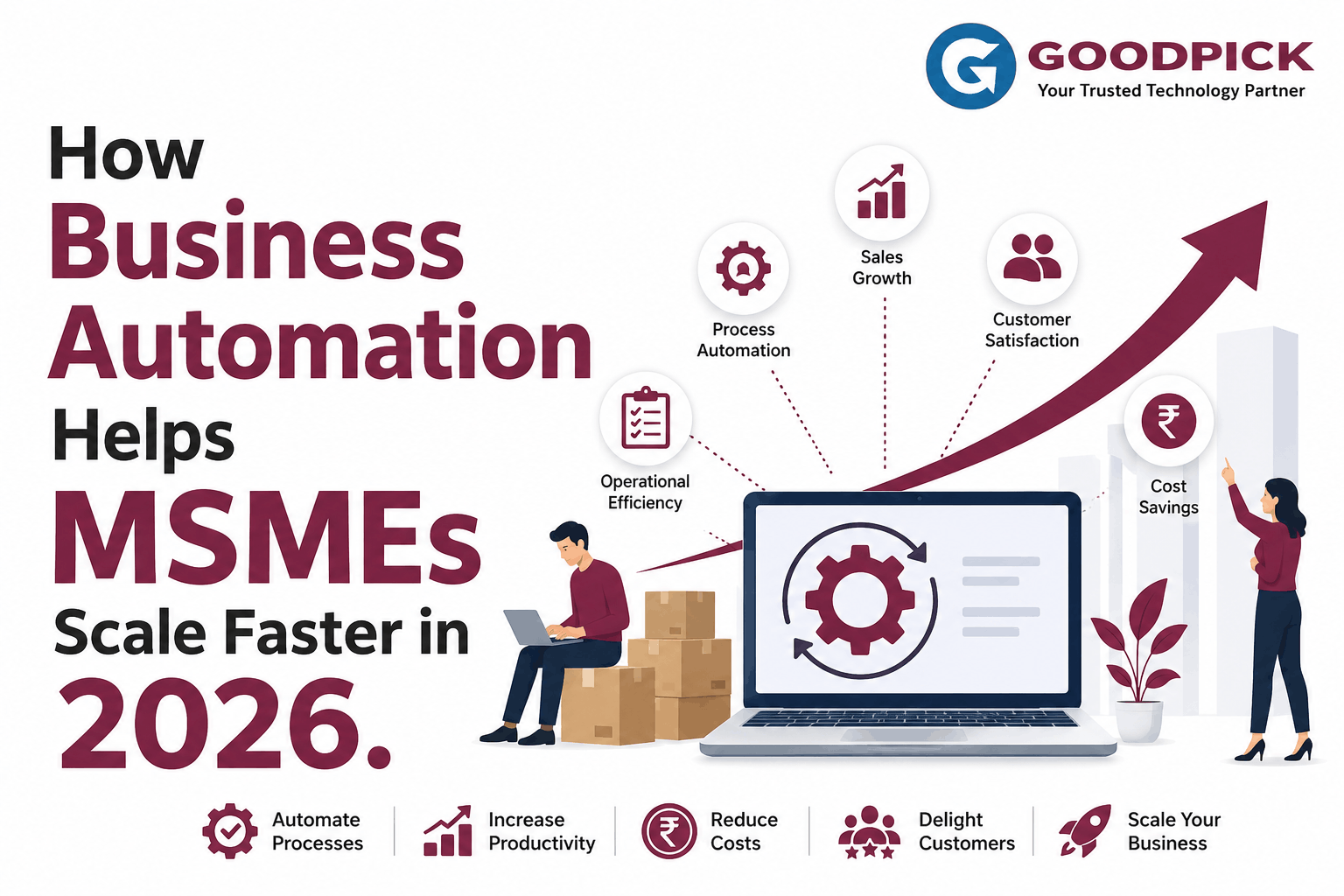
How Business Automation Helps MSMEs Scale Faster in 2026?
The Micro, Small and Medium Enterprises (MSMEs) are the backbone of world economy. In India alone, MSMEs contribute significantly to employment generation, exports, and GDP growth. However, as competition intensifies and customer expectations rise, traditional methods of managing operations are no longer sufficient.
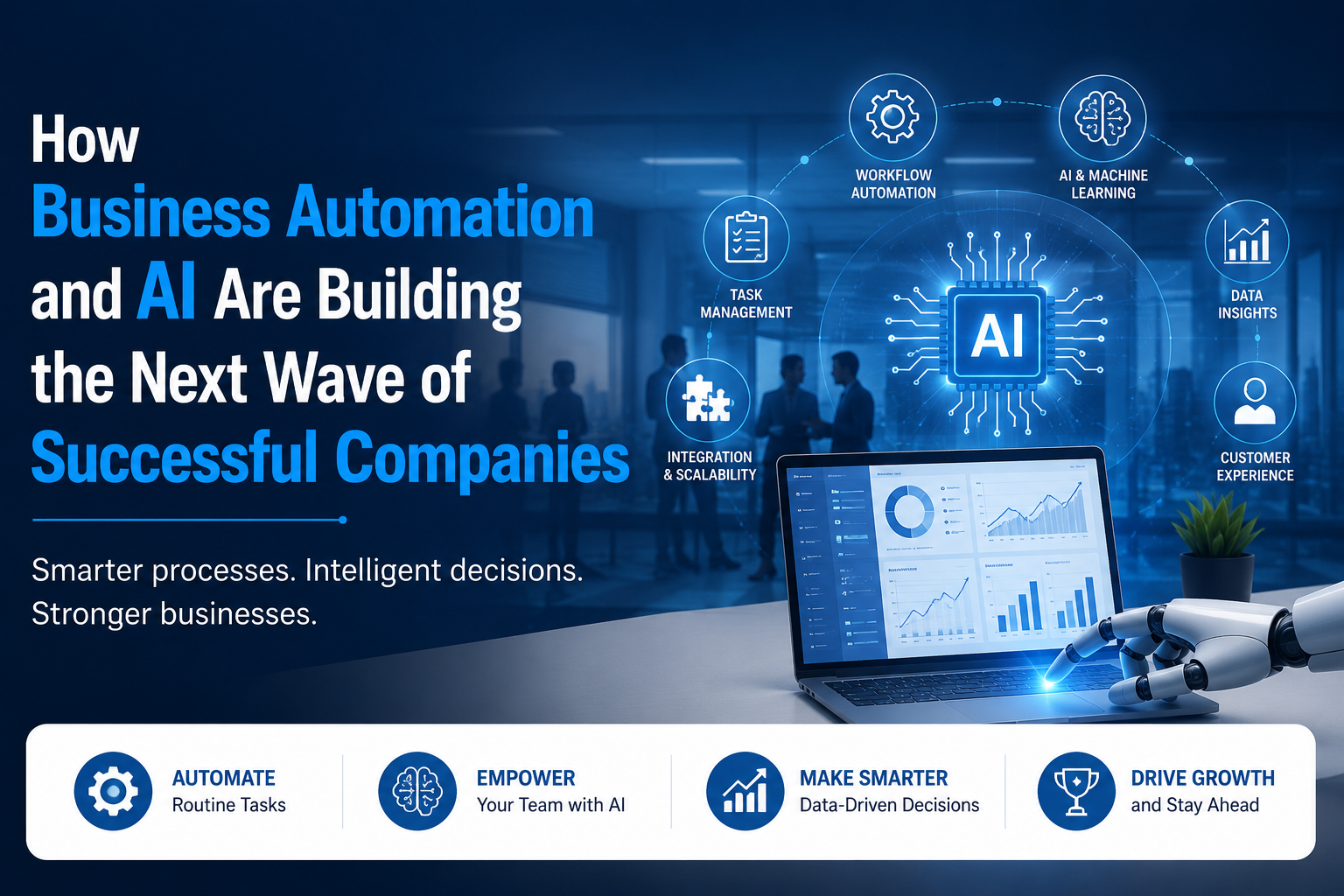
In 2026, business automation has become a game-changing strategy for MSMEs looking to scale faster, improve efficiency, and maximize profitability. Companies that embrace automation are able to streamline repetitive tasks, reduce operational costs, improve customer experiences, and make data-driven decisions.
This article explores how business automation empowers MSMEs to achieve sustainable growth and why adopting automation technologies is essential for future success.
What is Business Automation?
Business automation refers to the use of technology to perform repetitive and time-consuming tasks with minimal human intervention. These tasks can include:
Sales management
Lead tracking
Customer communication
Inventory management
Invoice generation
Payroll processing
Reporting and analytics
Customer support
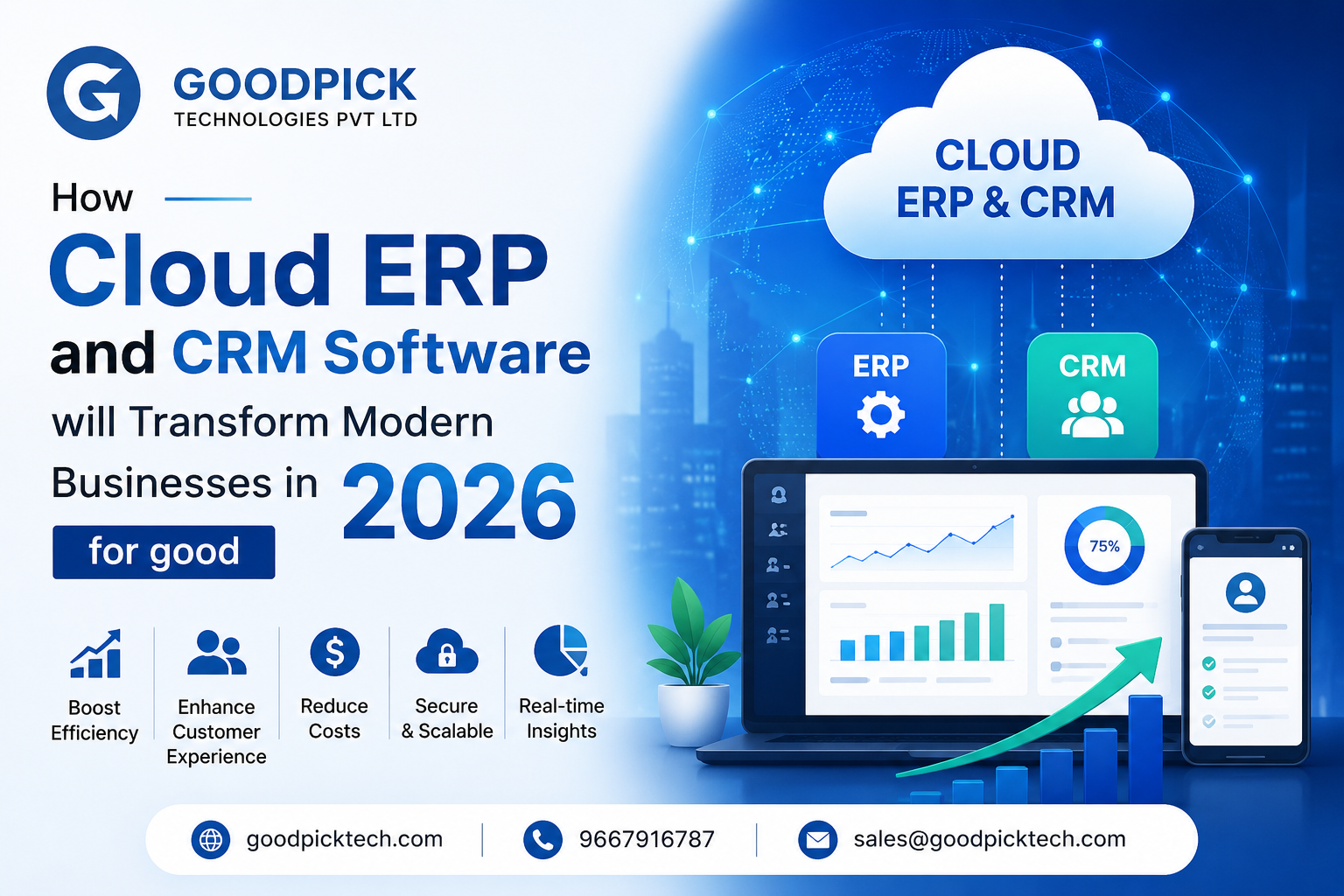
Modern automation platforms integrate ERP, CRM, AI, cloud computing and workflow management tools into a seamless business ecosystem.
By automating routine activities, MSMEs can focus on strategic initiatives that drive business growth.
Why MSMEs Need Business Automation in 2026?
The business landscape is evolving rapidly. Customers demand faster responses, employees expect better tools, and competitors are leveraging advanced technologies.
Without automation, MSMEs often face:
Manual data entry errors
Delayed decision-making
Poor customer follow-up
Inefficient inventory management
Increased operational costs
Reduced employee productivity
Business automation helps overcome these challenges by creating streamlined processes that improve speed, accuracy, and scalability.
Key Benefits of Business Automation for MSMEs
Increased Operational Efficiency
One of the biggest advantages of automation is improved efficiency.
Tasks that used to take hours of manual labor can now be done in minutes.
Examples include:
Automated invoice generation
Inventory stock updates
Customer follow-up emails
Lead assignment workflows
Employee attendance tracking
As a result, businesses can handle higher workloads without increasing manpower costs.
Reduced Human Errors
Manual processes often lead to mistakes such as:
Incorrect data entry
Duplicate records
Inventory discrepancies
Billing errors
Automation ensures consistency and accuracy across operations.
With automated workflows, businesses can significantly reduce costly mistakes and improve customer satisfaction.
Faster Lead Management and Sales Growth
Many MSMEs lose potential customers because sales teams fail to follow up on leads promptly.
CRM automation helps businesses:
Capture leads automatically
Assign leads instantly
Schedule reminders
Track customer interactions
Automate sales pipelines
Businesses using CRM automation can respond faster and improve conversion rates.
For effective lead management solutions, businesses can explore CRM platforms and automation tools available through Borgerp and Leadofy.
Improved Customer Experience
Customer experience is a major competitive advantage in 2026.
Automation enables businesses to:
Send instant responses
Automate support tickets
Personalize communication
Track customer history
Manage service requests efficiently
Happy customers are more prone to buy from you again and recommend your business to other people.
Better Inventory Management
Inventory-related issues can negatively impact business performance.
Automation helps by:
Tracking stock levels in real time
Generating low-stock alerts
Automating purchase orders
Preventing stockouts
Reducing excess inventory
ERP systems provide complete visibility into inventory operations, helping MSMEs optimize working capital.
How ERP Automation Accelerates MSME Growth?
Enterprise Resource Planning (ERP) systems combine different business functions in a unified platform.
ERP automation streamlines:
Finance
Procurement
Inventory
Manufacturing
HR management
Sales operations
Benefits include:
Centralized Data Management
All business information is stored in one system, improving visibility and decision-making.
Real-Time Reporting
Business owners can access reports instantly without waiting for manual compilation.
Process Standardization
ERP ensures consistent workflows across departments.
Faster Business Scaling
As the company grows, ERP systems can handle increased complexity without requiring major process changes.
For businesses evaluating ERP solutions, relevant resources and ERP implementation guides can be linked from Borgerp's ERP-related content.
How CRM Automation Drives Revenue Growth?
Customer Relationship Management (CRM) software plays a critical role in business automation.
CRM automation enables:
Automated lead capture
Sales pipeline management
Customer communication tracking
Follow-up reminders
Performance analytics
Benefits of CRM Automation
Higher Conversion Rates
Automated follow-ups prevent leads from slipping through the cracks.
Better Sales Forecasting
Businesses can accurately predict revenue trends.
Enhanced Customer Retention
Personalized communication strengthens customer relationships.
Improved Team Productivity
Sales teams spend less time on administrative work and more time closing deals.
Businesses can also explore lead management and CRM automation strategies through Leadofy to improve lead nurturing and customer engagement.
AI-Powered Automation for MSMEs
Artificial Intelligence is transforming business automation.
In 2026, AI-powered tools help MSMEs:
Predict customer behavior
Automate customer support
Generate business insights
Analyze sales trends
Improve demand forecasting
AI-driven automation allows small businesses to compete with larger enterprises by leveraging advanced technologies without massive investments.
Workflow Automation Improves Employee Productivity
Employees often spend significant time on repetitive administrative tasks.
Workflow automation helps by:
Automating approvals
Managing document flows
Assigning tasks automatically
Sending reminders
Tracking project progress
This enables teams to focus on strategic and revenue-generating activities.
Higher productivity leads directly to faster business growth.
Cost Savings Through Automation
One of the most compelling reasons to invest in automation is cost reduction.
Automation lowers expenses associated with:
Manual labor
Administrative tasks
Error correction
Inventory wastage
Customer support inefficiencies
Businesses can achieve more with existing resources, improving overall profitability.
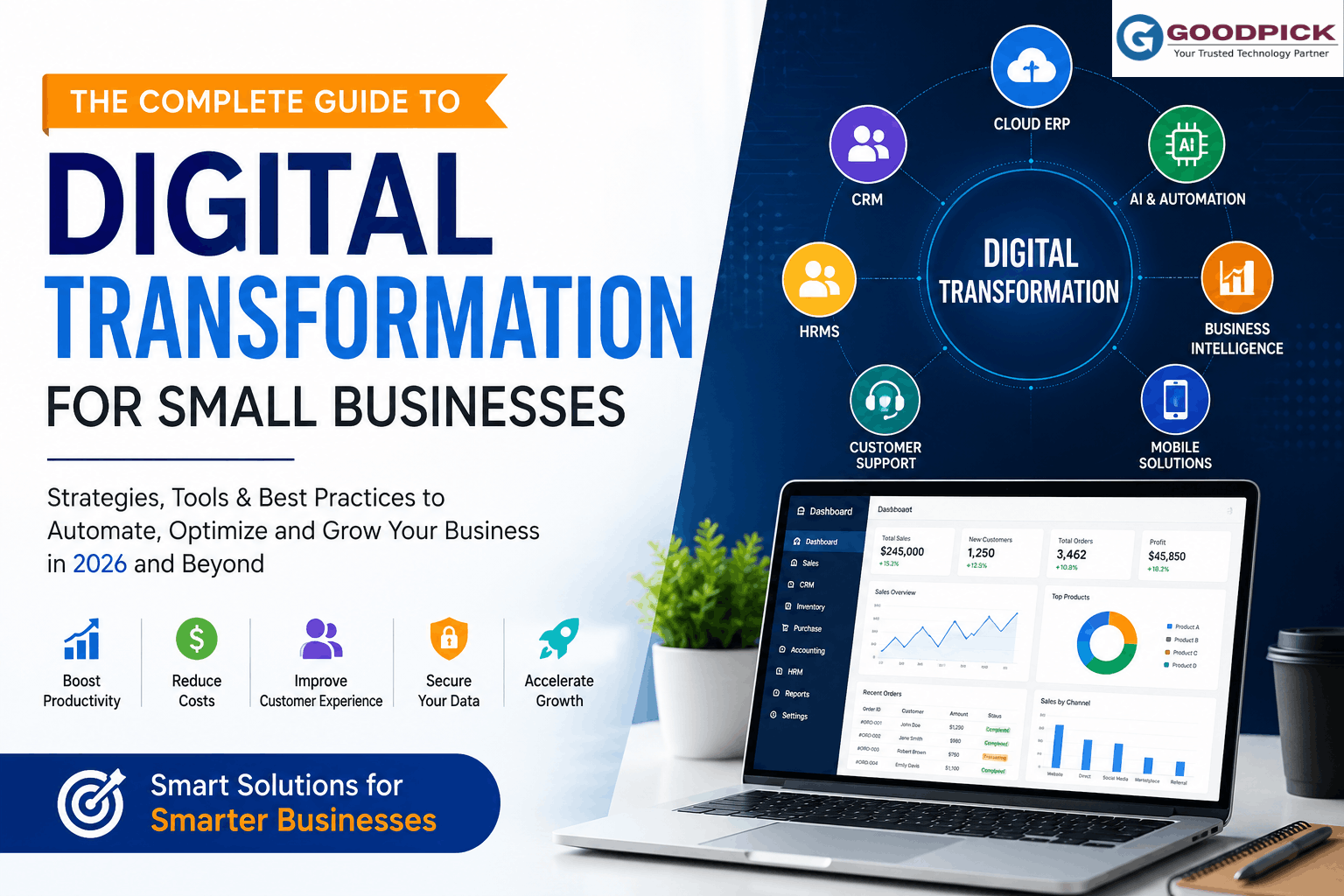
Digital Transformation and Business Automation
Business automation is a key component of digital transformation.
Digital transformation involves:
Modernizing business processes
Implementing cloud technologies
Leveraging data analytics
Enhancing customer experiences
MSMEs that embrace digital transformation are better positioned to adapt to market changes and customer demands.
Signs Your MSME Needs Business Automation
Consider automation if your business experiences:
Frequent operational errors
Slow customer response times
Growing administrative workload
Inventory management challenges
Poor visibility into business performance
Difficulty scaling operations
These indicators suggest that manual processes are limiting growth.
Best Areas to Automate First
For maximum impact, MSMEs should prioritize:
Sales Automation
Lead capture, follow-ups, and pipeline management.
Customer Service Automation
Ticket management and customer communication.
Inventory Automation
Stock tracking and replenishment.
Finance Automation
Billing, invoicing, and payment tracking.
HR Automation
Attendance, payroll, and employee records.
Starting with these areas can deliver immediate operational improvements.
Future of Business Automation for MSMEs
The future of business automation is driven by:
Artificial Intelligence
Machine Learning
Predictive Analytics
Cloud Computing
Hyperautomation
Intelligent CRM Systems
Advanced ERP Platforms
As technology becomes more affordable, automation will become accessible to businesses of all sizes.
MSMEs that adopt automation early will gain significant competitive advantages in efficiency, customer satisfaction, and profitability.
Conclusion
Business automation is no longer a luxury—it is a necessity for MSMEs aiming to scale faster in 2026. By automating repetitive processes, integrating ERP and CRM systems, leveraging AI technologies, and embracing digital transformation, businesses can improve productivity, reduce costs, and accelerate growth.
Organizations that invest in business automation today will be better prepared to meet future challenges and seize new opportunities. Whether it is streamlining sales operations, enhancing customer experiences, or optimizing inventory management, automation provides the foundation for sustainable business success.
Businesses looking to begin their automation journey should evaluate ERP solutions, CRM platforms, and lead management systems that align with their growth objectives and operational needs.
FAQs
1. What is business automation for MSMEs?
Business automation involves using software and technology to automate repetitive business tasks, improving efficiency and reducing manual effort.
2. How does automation help small businesses grow?
Automation improves productivity, reduces errors, lowers costs, and enables faster decision-making, allowing businesses to scale efficiently.3.
3. Is ERP software important for MSMEs?
Yes. ERP software integrates business processes, improves visibility, and helps manage operations from a centralized platform.
4. How does CRM automation increase sales?
CRM automation improves lead management, automates follow-ups, tracks customer interactions, and enhances conversion rates.
5. What are the biggest benefits of business automation?
Key benefits include higher productivity, cost savings, better customer service, improved accuracy, and faster business growth.
6. Which business processes should be automated first?
Sales management, customer service, inventory management, finance, and HR processes are ideal starting points for automation.
Ready to scale your business faster in 2026?
Explore modern ERP, CRM, and business automation solutions to streamline operations, improve customer relationships, and drive sustainable growth. Implement the right automation strategy today and position your MSME for long-term success.
Visit: https://goodpicktech.com/



No comments found