
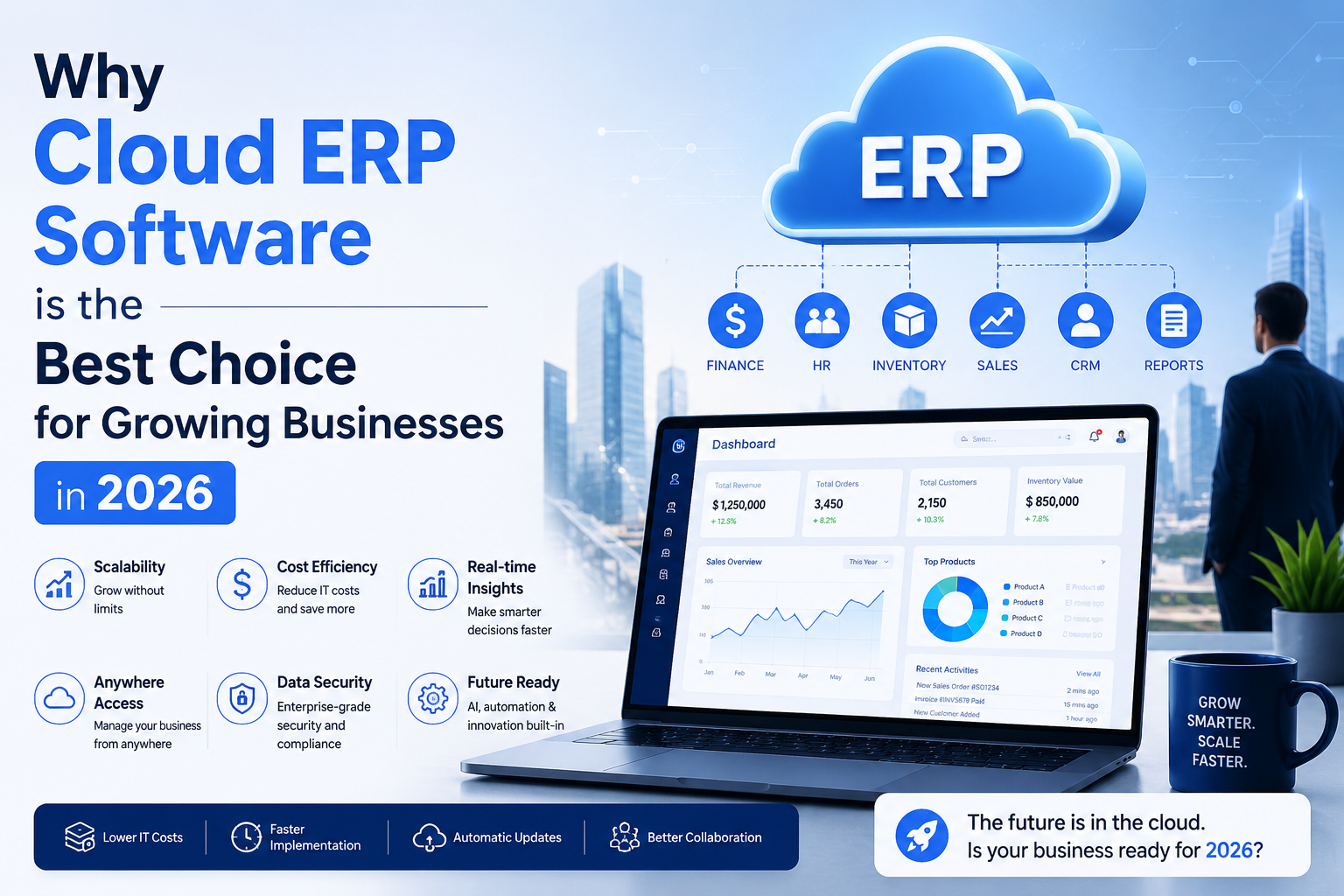
In today's rapidly evolving digital landscape, businesses are under constant pressure to improve efficiency, reduce operational costs, and deliver exceptional customer experiences. As companies expand, managing finance, inventory, sales, procurement, human resources, customer relationships, and operations through disconnected systems becomes increasingly difficult.
This is why Cloud ERP Software has become one of the most important technology investments for growing businesses in 2026.
Unlike traditional ERP systems that require expensive hardware and complex maintenance, cloud-based ERP solutions provide businesses with flexibility, scalability, AI-driven automation, and real-time insights from anywhere in the world.
Whether you're a startup, SME, manufacturing company, distributor, retailer, or service provider, adopting an AI-powered Cloud ERP can significantly improve productivity while preparing your organization for future growth.
What is Cloud ERP Software?
Cloud ERP (Enterprise Resource Planning) is a cloud-based business management system that integrates core business functions into one centralized platform.
These modules typically include:
Finance & Accounting
Sales & CRM
Inventory Management
Procurement
Manufacturing
Human Resources
Payroll
Customer Support
Business Intelligence & Analytics
Project Management
Instead of installing software on local servers, cloud ERP runs securely on cloud infrastructure, allowing users to access data anytime using desktops, laptops, tablets, or smartphones.
Why Businesses are Choosing Cloud ERP in 2026
The adoption of Cloud ERP Software has accelerated due to several technology trends:
Artificial Intelligence (AI)
Machine Learning
Predictive Analytics
Business Automation
Remote & Hybrid Work
Real-Time Business Intelligence
Digital Transformation
Multi-location Business Operations
Companies no longer want software that only stores data—they want intelligent systems that automate repetitive tasks, provide actionable insights, and support faster decision-making.
Top Benefits of Cloud ERP Software
1. Access Your Business Anytime, Anywhere
Modern businesses operate across multiple locations, remote teams, and mobile workforces.
Cloud ERP allows employees to securely access:
Sales reports
Inventory levels
Financial data
Customer information
Purchase orders
Employee records
This improves collaboration and ensures business continuity.
2. AI-Powered Business Automation
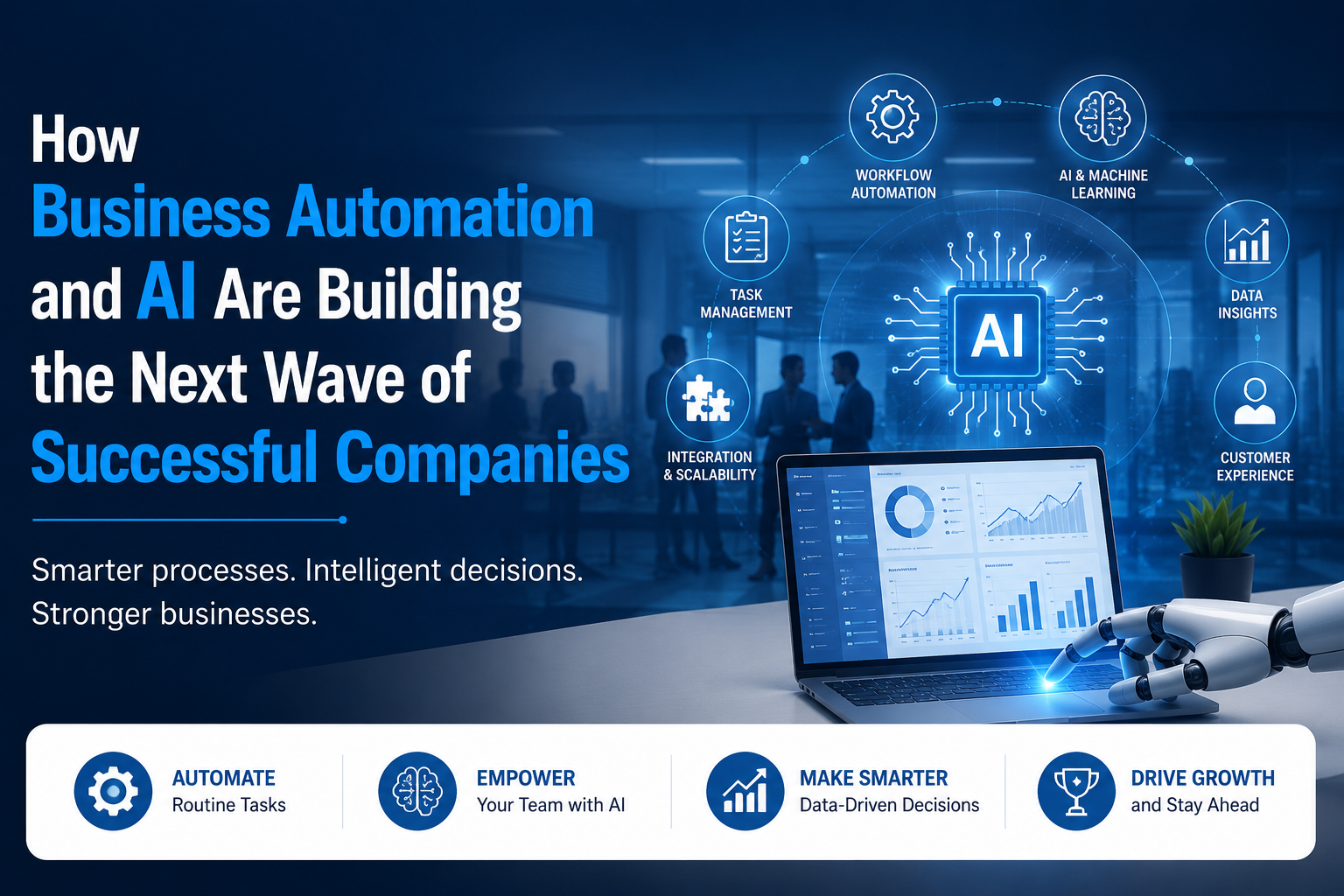
One of the biggest ERP trends in 2026 is AI-powered automation.
Modern ERP software can automatically:
Generate reports
Process invoices
Forecast inventory demand
Detect unusual transactions
Automate approvals
Predict sales trends
Schedule recurring tasks
Reduce manual data entry
AI helps businesses save time while improving accuracy.
3. Lower IT Costs
Traditional ERP systems require:
Dedicated servers
IT infrastructure
Annual maintenance
Software upgrades
Security management
Cloud ERP eliminates these costs because the software provider handles:
Hosting
Security
Updates
Maintenance
Backups
Businesses pay predictable subscription fees while reducing overall IT expenses.
4. Real-Time Business Intelligence
Successful businesses rely on data-driven decisions.
Cloud ERP provides live dashboards displaying:
Revenue
Sales performance
Cash flow
Inventory turnover
Purchase orders
Customer trends
Employee productivity
Instead of waiting for weekly reports, managers receive real-time insights that support faster decision-making.
5. Faster Business Growth
Growing businesses often struggle because different departments use separate software.
Cloud ERP integrates every department into one centralized platform.
This improves:
Communication
Workflow efficiency
Reporting accuracy
Customer service
Operational visibility
Businesses can scale without adding unnecessary complexity.
Why AI-Powered ERP is the Future
Artificial Intelligence has transformed modern ERP software.
AI can now:
Forecast future sales
Recommend inventory purchases
Identify slow-moving products
Analyze customer buying behavior
Predict equipment maintenance
Optimize business processes
Instead of reacting to problems, businesses can proactively prevent them.
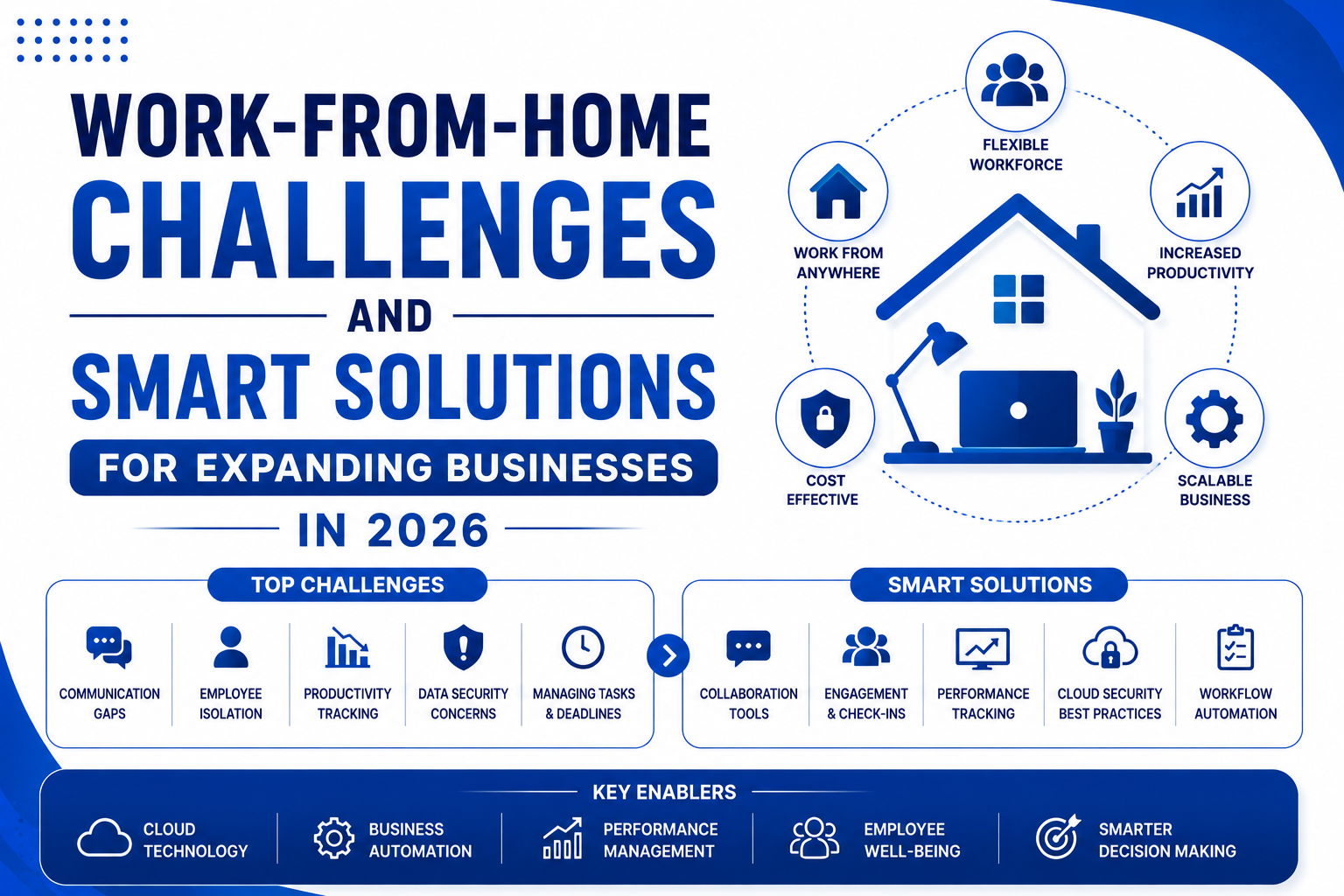
Cloud ERP Supports Remote and Hybrid Work
Remote work is now standard for many organizations.
Cloud ERP enables employees to:
Access company data securely
Approve workflows online
Monitor projects remotely
Collaborate in real time
Track business performance from anywhere
This flexibility makes cloud ERP ideal for modern work environments.
Enhanced Security and Data Protection
Security remains a top concern for every business.
Leading cloud ERP platforms offer:
Data encryption
Multi-factor authentication
Role-based access control
Automatic backups
Disaster recovery
Continuous monitoring
Compliance with global security standards
Cloud providers invest heavily in cybersecurity, helping businesses protect sensitive information.
Cloud ERP Improves Customer Experience
Customer expectations continue to rise.
Integrated ERP and CRM systems allow businesses to:
Respond faster to inquiries
Track customer interactions
Manage sales pipelines
Process orders efficiently
Improve after-sales service
Better customer experiences often lead to higher retention and increased revenue.
Industries Benefiting from Cloud ERP
Cloud ERP delivers value across many sectors, including:
Manufacturing
Retail & E-commerce
Wholesale & Distribution
Healthcare
Education
Construction
Logistics
Professional Services
Hospitality
IT Companies
Each industry can tailor ERP modules to meet its specific operational needs.
Cloud ERP vs Traditional ERP
For growing businesses, cloud ERP offers greater flexibility and lower long-term costs.
Signs Your Business Needs Cloud ERP
You should consider implementing cloud ERP if:
Your teams use multiple disconnected systems.
Manual data entry causes frequent errors.
Business reports take too long to prepare.
Inventory management lacks visibility.
Sales and finance teams work with different data.
Customer service is inconsistent.
Business growth is creating operational challenges.
You want to automate repetitive processes.
Future Trends in Cloud ERP for 2026
Cloud ERP continues to evolve with technologies such as:
AI Agents for business operations
Predictive analytics
Intelligent workflow automation
Voice-enabled ERP
Internet of Things (IoT) integration
Robotic Process Automation (RPA)
Low-code ERP customization
Advanced cybersecurity
Sustainability and ESG reporting
Generative AI-powered business insights
Businesses that adopt these innovations early will gain a significant competitive advantage.
How GoodPick Technologies Helps Businesses
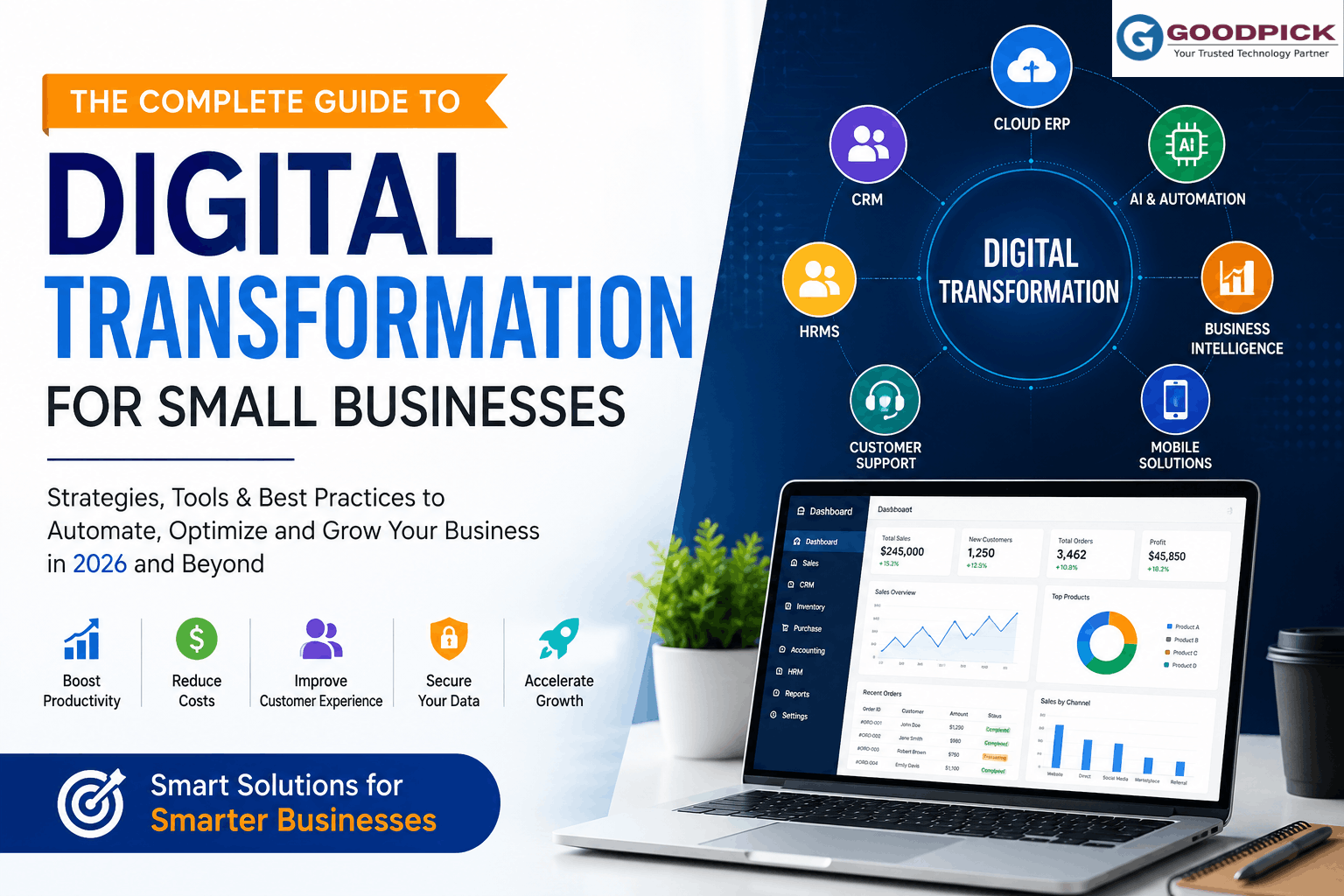
At GoodPick Technologies, we help organizations embrace digital transformation with modern, scalable cloud ERP solutions tailored to their business needs.
Our ERP solutions support:
Finance & Accounting
Sales & CRM
HR & Payroll
Inventory Management
Procurement
Workflow Automation
Business Intelligence Dashboards
Cloud Hosting
AI-Driven Business Automation
Whether you're upgrading from spreadsheets or replacing a legacy ERP, our experts ensure a smooth implementation with minimal disruption.
Final Thoughts
As businesses continue to embrace digital transformation in 2026, investing in Cloud ERP Software is no longer optional—it's a strategic necessity. From AI-powered automation and real-time analytics to improved collaboration, enhanced security, and seamless scalability, cloud ERP equips growing organizations with the tools they need to operate efficiently and stay competitive.
Choosing the right cloud ERP solution today can reduce operational costs, improve decision-making, strengthen customer relationships, and create a solid foundation for long-term growth.
If your business is planning to scale, now is the ideal time to move to a cloud-based ERP platform and unlock the full potential of intelligent business management.







No comments found